A Lover of Markets
Being a lover of markets, different cultures and bright shiny things I was delighted to find a colourful flyer advertising a walking tour of the Markets of Warwick whilst on holiday in Durban. One phone call later and the next day I was being dropped off at the meeting point by my slightly concerned mother asking ‘Are you sure you going to be safe dear?’ I waved her off, promising to stick to the group and not to eat anything that could make me ill. She was off to a shopping mall and so was I. Except that mine had over 6 000 shops! OK, stalls … depending on how you look at it (on an average day the area accommodates at least 6 000 street vendors).
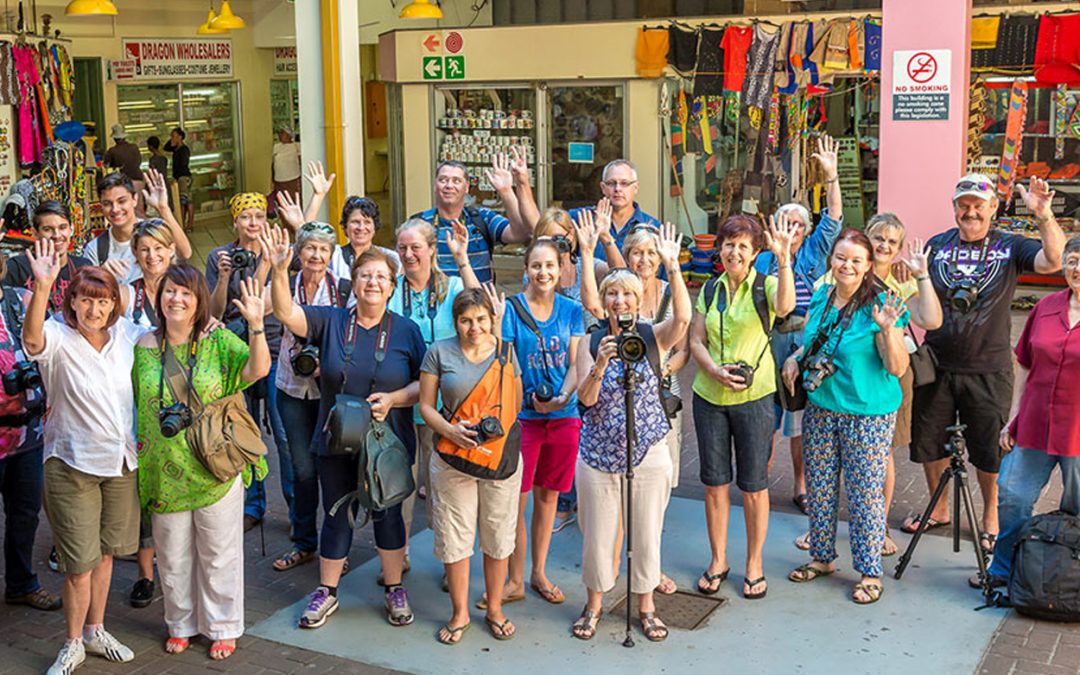
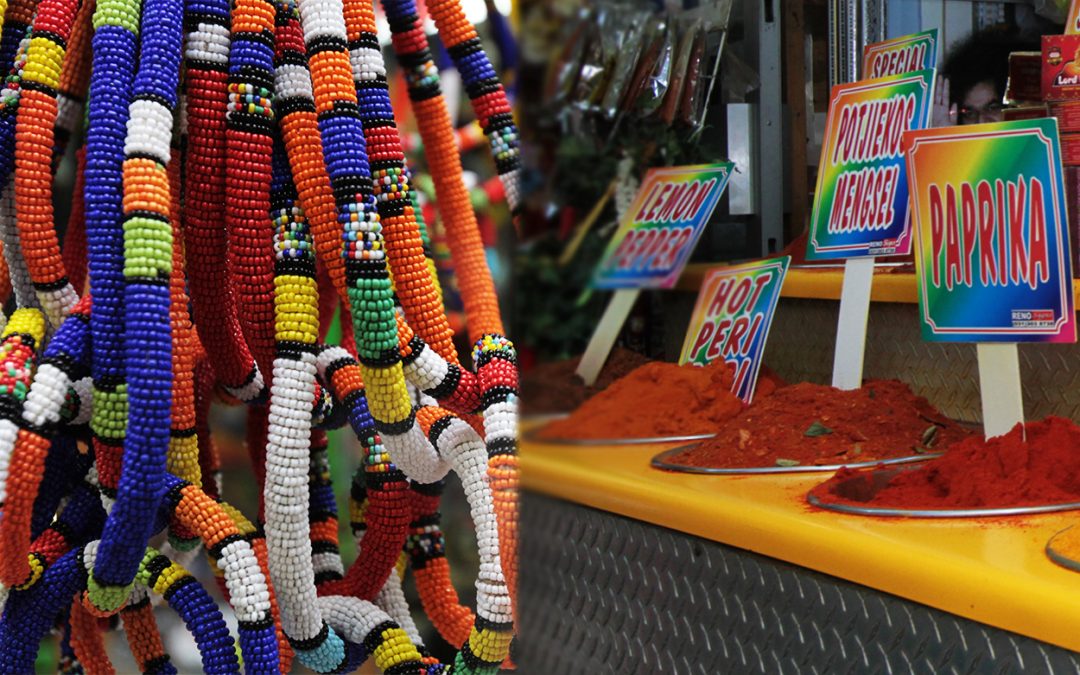
The meeting point was in the centre of Victoria Street Market which was was established in 1910 and will be 100 years old this year. Warning: when you first enter this market at 9am in the morning it’s a sensory overload. The smell of spices and incense hang in the air whilst your eyes take in all the brightly coloured garlands, beadwork and baskets. Even if you’ve had breakfast you immediately start wondering where you can get a curry and whether you should buy spices from the nice Indian lady or a wooden carving from the charming gentleman. It’s all so tantalizing and you haven’t even started the tour yet!
Once we had our group together we had a brief overview of the Markets of Warwick and met our tour leaders, Tam, Sambo and Zakele. Tam works with Asiye eTafuleni, an NPO that enables trader committees to work alongside the Municipality and various organisations to create and maintain an effective informal trading location benefiting the traders and the people who depend on these vendors’ income. Sambo was our tour guide that day, having qualified in 2010 when Asiye eTafuleni assisted any traders who wanted to take the course to become certified tour guides. He is a trader in Brook Street , selling pinafores and even does sewing! He is also the chairperson of the Warwick Avenue CPF (Community Police Forum) and a very active member of the Warwick community who sits in several organizations. Zakele has been a member of the Traders Against Crime (TAC) since 2003 and assists in the security aspect of the tours. He is also a trader in Warwick and has a stall in Berea Station that sells hats, clothing accessories as well as a stall that sells fried chips and owns one of the pool tables that resides in Brook Street. Nobody has a better insight to these markets than these guys!
We took a walk around the Victoria Street Market where one is tempted to spend all their money at once. Thankfully the tour ends back where you started, so if there is something you really fancy you can get it later. This will also save you carrying it around for the rest of the tour. Unless it is a samoosa of course (and Durban is hard to beat when it comes to potato samoosas!)
Next up was the Bead Market. We weaved through people making their way to work, people chatting to their friends and people on their way to the taxi rank. I was amused to see a group of youngsters playing a game of pool whilst they waited for their taxi to arrive. You have to love Africa! After all, where else in the world would you be able to play a game of pool whilst waiting for your taxi, bus or train? I was tempted to have a game myself, but my attention was diverted by lots of shiny cheerful objects in the form of beaded necklaces, bracelets, mugs, belts, hats, coasters …. The list could go on and on. I was in heaven! I was also very glad that I did the tour on a Friday as that is the only day these ladies come to the market from the coastal areas outside Durban. I took ages to make my decision on what to get as it is all so tempting and beautiful. In the end I purchased some bracelets, a beaded mug and some coasters. Since then I have been asked on a number of occasions by petrol attendants if I am a sangoma … hmmm, what bracelets did I buy I wonder?
The Bead Market effortlessly flowed into the Impepho and Lime Market. Here Sambo gave us plenty of interesting information about the different types of red and white lime balls mined north of the city. We also learnt about umcako (mineral lime) and ibomvu which are both used by trainee and qualified izangomas by being applied to the skin. These products are also used as sunscreen, paint and for pottery. We were very amused to find out that umcako is also often craved after by pregnant women! On our way through this section of the markets we passed bunches of mpepho, mostly used to communicate with ancestors. Clearly none of us were pregnant or wanting to chat to our dead grandmother as no purchases were made by our group here! But a fascinating section of the market that not many people would see or understand unless on this tour.
Then it was on to the vibrant Brook Street Market with its brightly coloured pinafores’, traditional Zulu hats, shoes, bags and household products all beneath a shaded roof. Here we found out about the different types of pinafores and maids’ uniforms (there is difference and it depends on whether the wearer is married or single), watched the busy tailors making up said pinafores on their trusty old sewing machines and looked out over a lot of old headstones. This market is also historically significant because Christian, Muslim, and Jewish burial sites are all located within this area with the three different religious denominations buried alongside one another.
The Berea Station Market was our next stop and coming from Cape Town as well as being a lover of tea, I was delighted to find the Langa Tea Kiosk. I was too late for tea apparently, but as the sun had come out and it had become typically Durban-humid, I settled on a cold coke instead. Berea Station is one of the two commuter rail stations serving the inner city and gets extremely busy during the peak periods. Commuters and passers-by can buy all sorts of goodies here, including traditional Zulu spears and shields and religious attire as well as dvds, shoes, belts, wallets and bags. There is also a lot of food on offer, from fruit and vegetables to vetkoek to battered fish – which incidentally I thought was battered pigeon, much to the amusement of Zakele who by now had become my trusty personal guide, bodyguard and photograph-requester. Without him I would still be lost in the maze of market stalls or spending my change on the pool tables.
With nobody lost yet, it was down the stairs and out into the sunshine for the Early Morning Market. Affectionately described as ‘The Mother Market’, the Early Morning Market is now 100 years old and boasts over 670 stalls. From 5am in the morning you can buy a variety of fresh produce, spices, flowers and even live poultry. Everywhere you looked was full of red ripe tomatoes, bright yellow lemons and every type of potato. I marvelled at the skills of the potato stackers, smiled at the interesting array of bath and body products in their unique packaging and considered buying pink peanuts and madumbi’s. I was starting to develop a deep affection for The Mother Market. After all, where else can you buy glycerine in a vodka bottle?
What goes better with potatoes than meat? The next part of the tour took us to the Bovine Head Cooking Market. This is the part where most people start wrinkling their noses at the thought of eating a piece of beef from a cow’s head (myself included). Well wrinkling of noses aside, let me tell you about skills. That woman had them! With a few deft chops of her small axe, she cleaved the meat off the bone in minutes. I was incredulous! The meat is then cooked in a pot nearby and served on a wooden board with a traditional dumpling (steamed bread). You are welcome to sample a portion of this prepared authentic Zulu delicacy if you wish. I politely declined even though I was probably missing out on a tasty treat judging by the groups of contented-looking locals chomping away happily.
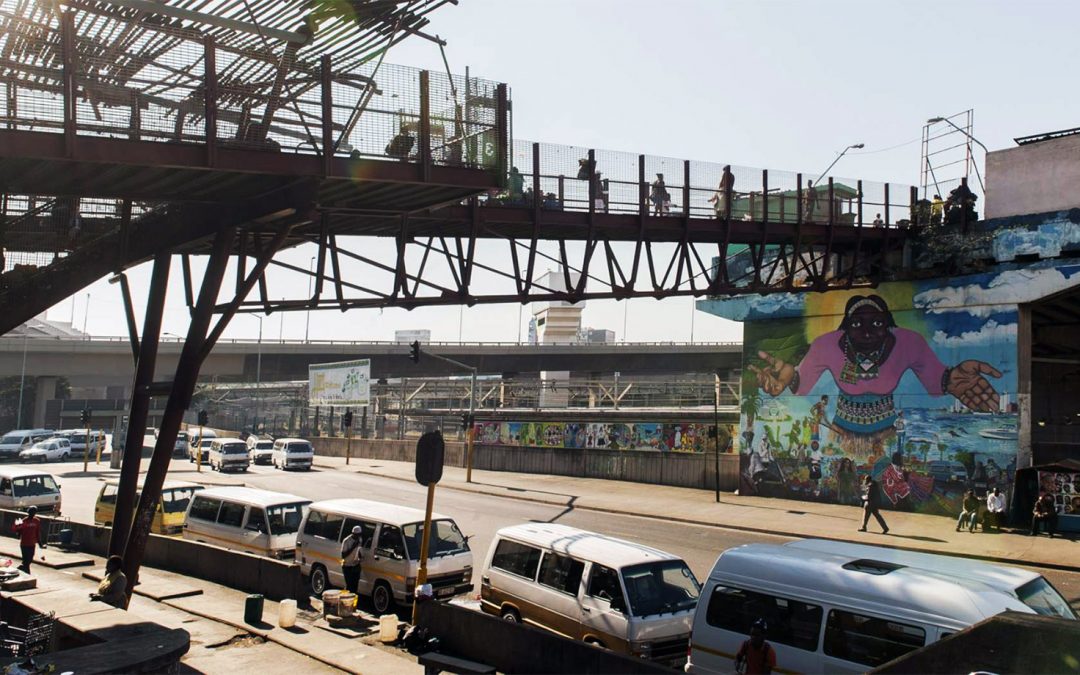
It is hard not to sway your hips to the energetic rhythm of local and international sounds heard and sold through the Music Bridge Market on your way to the Herb Market. The Herb Market provides trading space for approximately 700 vendors and it is a sprawling mass of dried herbs, packets of seeds, plant roots and animal skins. The market functions much like a western pharmacy where customers approach the herb sellers and traditional healers with their ailments and the healers supply them with medicine accordingly. If you have a specific ailment I am sure this is the place to find the perfect cure, if you dare!
Just after noon we landed back at Victoria Street Market where I bid farewell to Tam, Sambo, Zakele and the friends I had made on the three-hour journey. I also made time to buy some spices and eat another samoosa before meeting my mother to compare purchases.
Why do this tour?
I have to say that this tour was probably a highlight of my trip to Durban and I am going to spread the word unashamedly. You’ll be welcomed into a lively world where you will learn about traditions and meet interesting people. You can buy jewellery and potatoes, have a game of pool, or take home a chicken. But most of all you will be supporting an initiative that is helping boost local traders and their livelihood as well as the local tourism industry. Do this tour – I stake my sangoma beads on the fact you will love it.
Book a tour
Days of operation: Fridays and Saturday mornings from 9.30am
Cost: R50 (Donations encouraged to reach the preferred cost of R100)
Phone: 031-309-3880
www.marketsofwarwick.co.za



Recent Comments